
We Are the Landscape: Walking with Dragons
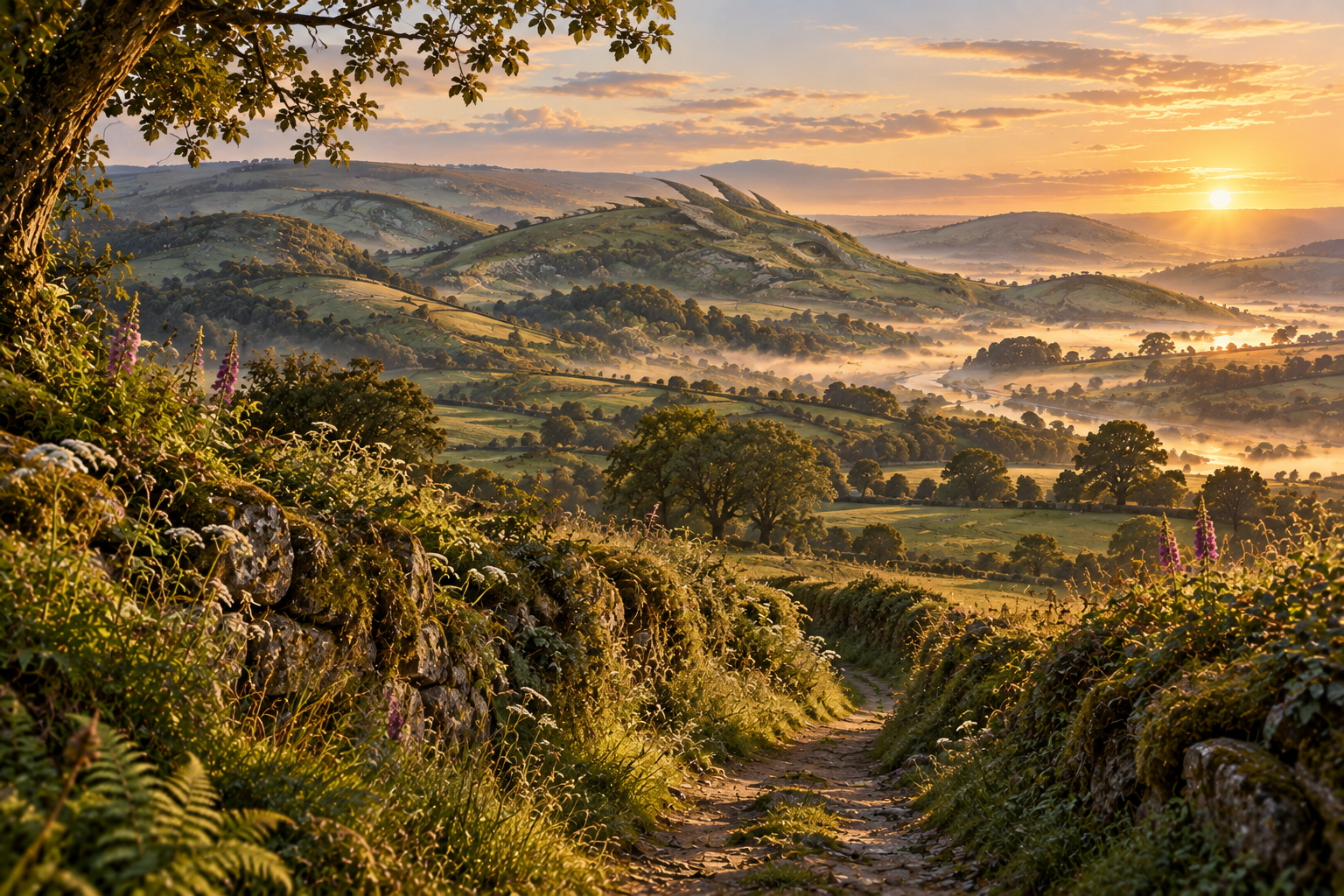
Dragons forming the landscape in Devon
When the Dragons Came Close
Two walks, two messages, and a different way of sensing the landscape
Sometimes an experience arrives before you have had time to make sense of it.
That was how it felt for me after visiting The Sanctuary at Avebury.
I had already been thinking about dragons in the landscape, about the way they seem to appear in old stories, ancient sites, ridgelines and earth-energy traditions. At The Sanctuary, that sense became particularly strong. There was something about the place that seemed to open a door.
Then, not long afterwards, I went for a walk up the lane in Devon with the dogs.
Nothing dramatic was happening. It was just an ordinary walk through a familiar landscape.
And yet I suddenly became very aware of what felt like a presence.
Not something I saw with my physical eyes. More a sense of energy, intelligence, scale and ancientness woven through the land itself.
The words that came were immediate.
I did not sit down and construct them afterwards. I spoke them into my phone as they arrived.
Walk One
Dragon energy, embodied.
The ancient days.
The moments of all time.I am one. We are one.
We embrace and embody.Experiencing the oneness.
The limitlessness.
All-encompassing.Radiantly through every aspect
of energy and light.We are the landscape.
We are the light.
We are conduits of Grand Central Sun.Light. Life. Energy.
What struck me afterwards was how little this felt like a message about dragons as creatures.
It felt much more like a message about being.
About the dragon not simply existing within the landscape, but somehow being the landscape.
That felt important.
We often imagine dragons as distinct beings, something we might encounter, see, summon or relate to. But the feeling on that walk was much more expansive than that.
The sense was not, Here is a dragon in the landscape.
It was more:
The landscape itself is alive.
The hills, trees, light, wind, stone and earth were not separate from the presence I was sensing. The dragon energy felt woven through them all.
And the phrase that stayed with me most was:
We are the landscape.
There is something very different about that from imagining a dragon flying above us or sleeping beneath a hill.
It suggests something more elemental.
Something distributed.
Something that does not begin or end neatly at the edges of a body.
The ancientness of it
There was also a strong feeling of time.
Not historical time in the usual sense, but something much larger.
"The ancient days. The moments of all time."
It felt like a reminder that the land holds layers far beyond our own short human experience of it.
We tend to see a place through the scale of our own lives. A lane is somewhere we walk the dogs. A field belongs to someone. A hill has a name on a map.
But the land existed long before those descriptions.
And perhaps some of the presences, stories and patterns we associate with it do too.
Whether we understand dragons as archetypes, land spirits, energetic intelligences, mythic memory or something else entirely, they carry a sense of deep time.
Older than us.
Older than many of the stories we tell about them.
And yet somehow still present.
Walk Two
On another walk, that sense returned.
The language was different, but the feeling was very similar.
Light, luminous light.
We are the beings of light.Know our scent.
Know the whispers on the wind.
Know the furrows in the land.Feel us.
Integrate us.
Fly with us.We burn bright.
This second message felt more intimate.
The first had felt vast and almost cosmic.
The second felt closer to the senses.
The scent.
The wind.
The furrows in the land.
Almost as though the invitation was not to look harder, but to feel more deeply.
That resonated with me.
So much of modern life encourages us to relate to the world visually and intellectually. We look at a map. We read about a place. We take photographs. We identify what something is called.
But what happens when we begin noticing the other ways a landscape communicates?
The smell of damp earth.
The movement of air through trees.
A sudden shift in atmosphere.
The pull of a particular path.
The way one part of a landscape seems to hold our attention more strongly than another.
Perhaps "the whispers on the wind" are not always words.
Sometimes they may simply be a change in how we feel.
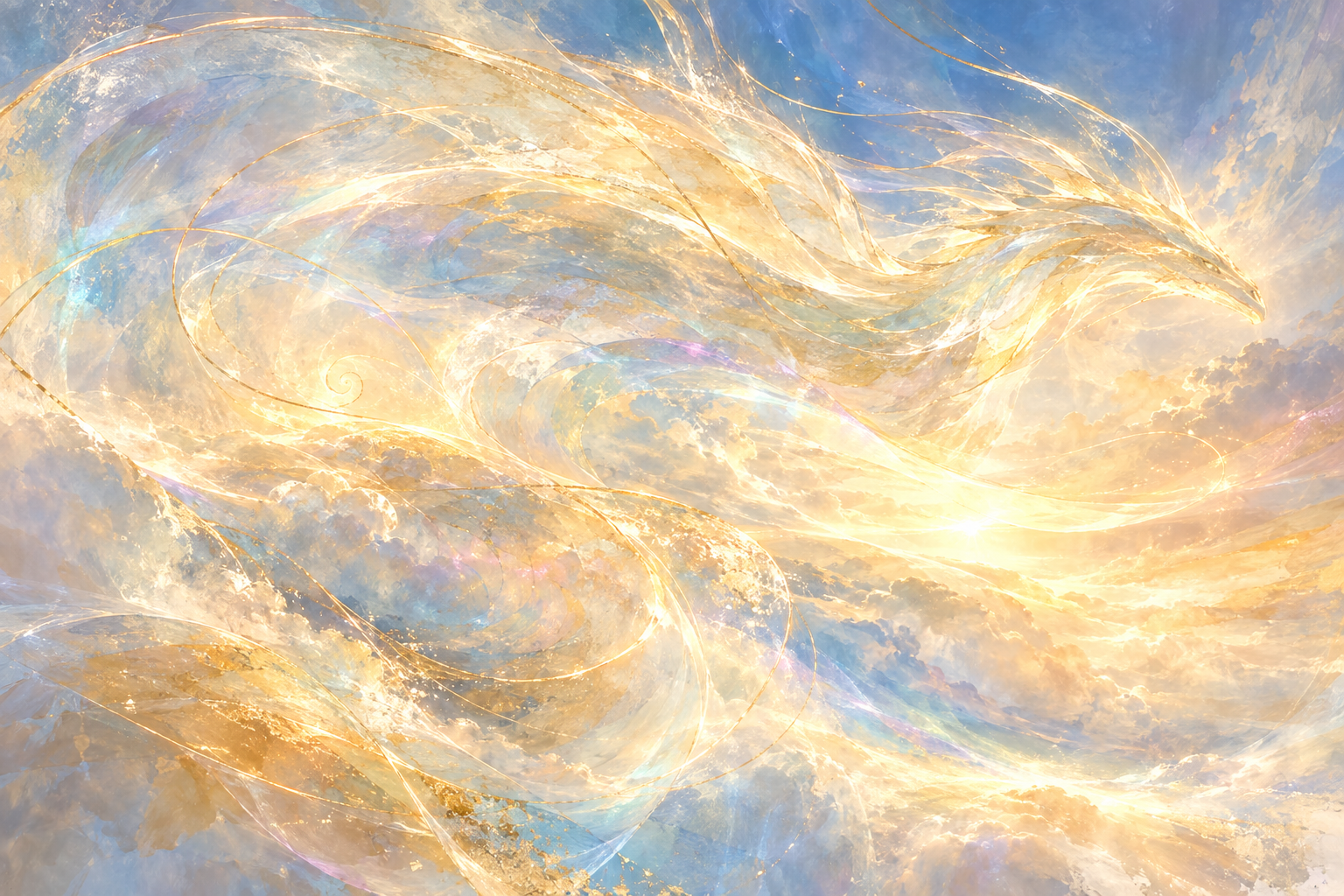
Dragons in a sky of light
Dragons as light
I was also struck by how strongly both messages were about light.
Not fire.
Light.
"Radiantly through every aspect of energy and light."
"Light, luminous light."
"We burn bright."
Fire and dragons are usually inseparable in our imagination, but this felt different. The fire was not destructive. It was illumination.
Vitality.
Life force.
A brightness moving through the landscape.
The phrase "conduits of Grand Central Sun" had that same quality for me. It suggested something flowing through rather than belonging to one place or one being.
A current.
A radiance.
Something received and transmitted.
I do not feel the need to define exactly what that means. In fact, I think these experiences can lose something if we try to translate them too quickly into a fixed system.
Sometimes it is enough to notice what arrives.
What if the dragon is not separate from us?
The other recurring theme was oneness.
"I am one. We are one."
"We embrace and embody."
There was no strong sense of "human here, dragon there".
The boundaries felt much softer.
That made me wonder whether part of the old dragon symbolism is really about relationship with the land itself.
We may have inherited stories in which dragons became creatures to defeat, control or fear. But there are older and wider traditions in which dragons are protectors, guardians, bringers of rain, keepers of wisdom and expressions of the forces of the natural world.
Perhaps part of working with dragon energy is not about calling something in from elsewhere.
Perhaps it is about remembering a relationship that is already here.
With the land.
With light.
With our own instinctive nature.
With something larger than the individual self.
After Avebury
It did not feel accidental to me that these experiences happened so soon after being at The Sanctuary.
That visit had already opened up something.
I had been exploring the landscape there through dowsing and intuition, and thinking about hidden patterns and the relationship between sacred sites, dragon imagery and the wider land.
Then I came home and simply walked up a Devon lane.
No ancient monument.
No stone circle.
No grand pilgrimage.
Just the dogs, the lane, the fields and the wind.
And perhaps that was part of the message too.
The sacred landscape does not begin and end at famous sites.
We do not necessarily have to be standing at Avebury, Glastonbury or an ancient stone circle to experience the living quality of the land.
The invitation may be much closer.
Perhaps it is on the lane outside our house.
Perhaps it is in the trees.
Perhaps it is in the furrows of a field.
Perhaps the dragons are not waiting somewhere remote and mythical.
Perhaps they are already here.
Learning to notice
I still do not feel the need to decide exactly what happened on those walks.
Was I channelling?
Was I tuning into an archetypal field?
Was my imagination working with something that had been activated by Avebury?
Was I sensing the landscape in a more intuitive way?
Could several of those things be true at once?
I am comfortable leaving that open.
What matters to me is the quality of the experience.
It was expansive.
Connected.
Light-filled.
And it changed the way I looked at the landscape around me.
That, perhaps, is one of the gifts of dragon work.
It invites us to look again.
To listen differently.
To feel beyond the obvious.
And maybe, every now and then, to remember that the land beneath our feet is not simply scenery.
It is alive with story, memory, energy, light and presence.
And sometimes, when the wind moves through the trees and the light catches the land in just the right way, we may sense something ancient moving with it.
Something bright.
Something vast.
Something that whispers:
Feel us. Integrate us. Fly with us.
We burn bright.